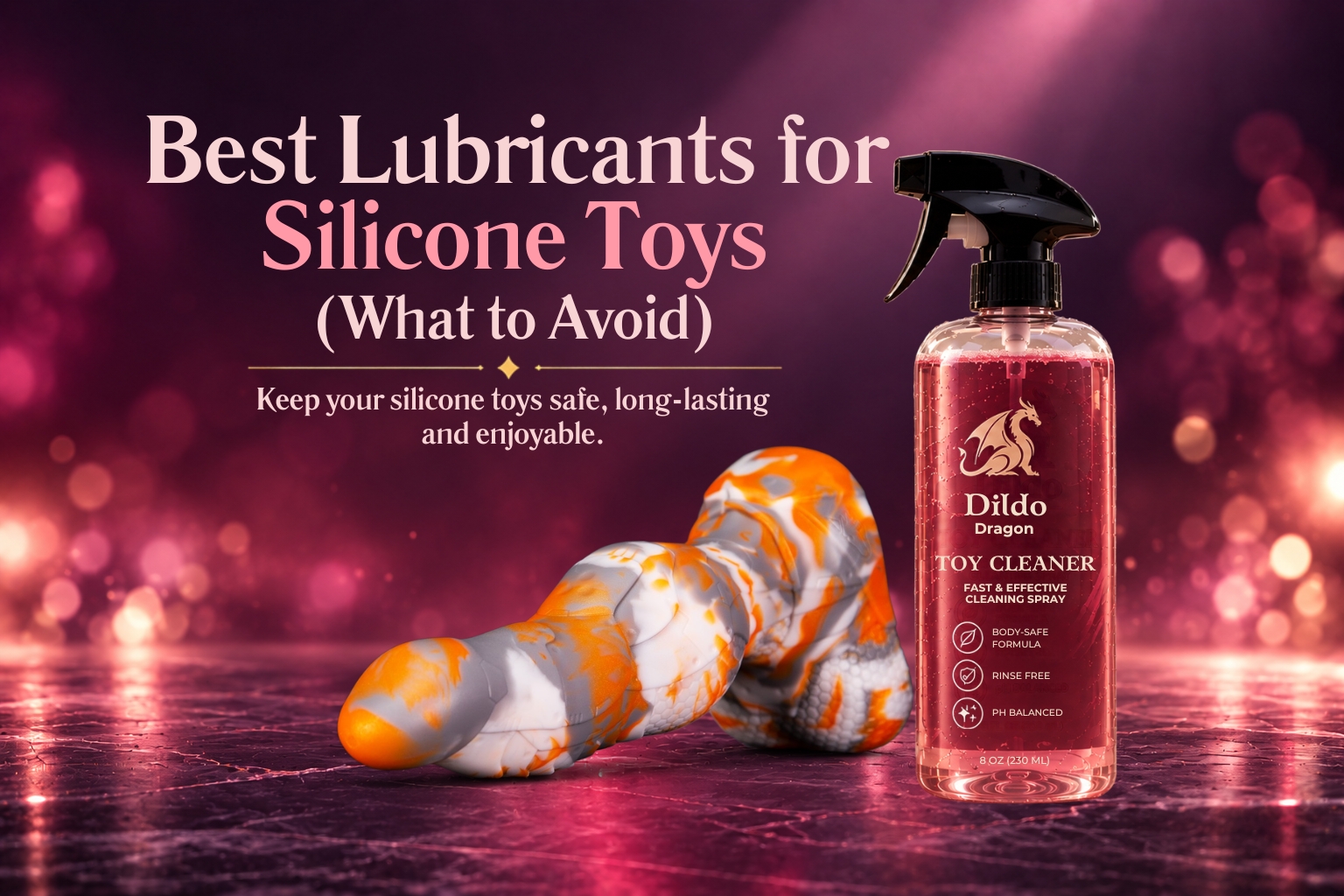
You invested in a beautiful, body-safe silicone toy. Now comes a question that trips up beginners and experienced collectors alike: which lube should you use with it?
It sounds like a small detail, but lube has a huge impact on your experience. The right lubricant makes play smoother, more comfortable, and more pleasurable. The wrong one can damage your toy, irritate sensitive skin, disrupt your body’s natural balance, or even increase the risk of infection.
The lube aisle does not make things easy. Bottles promise warming, tingling, flavored, long-lasting, and “natural” formulas, often with ingredient lists that are hard to decode. And the most common piece of advice, “never use silicone lube with silicone toys,” is only partly true.
In this guide, we break down the best lube for silicone toys, explain each lube type in plain language, list the ingredients worth avoiding, show you how to test compatibility at home, and share tips for choosing the right lube for every type of play.
Ready to stock up? Browse our full Lubricants collection anytime.
Why Lube Matters So Much
Lube is not just for people who “need” it. It is one of the simplest ways to make any experience better.
- Comfort. Lube reduces friction, which prevents irritation and small tears in delicate tissue.
- Pleasure. Smooth glide lets you focus on sensation rather than discomfort.
- Safety. Friction-related micro-tears can increase the risk of infections. Good lube helps prevent them.
- Toy longevity. The right lube protects your toy’s surface. The wrong one can break it down.
- Essential for anal play. The anus does not produce its own lubrication, so lube is not optional.
With fantasy toys, lube matters even more. Ridges, scales, knots, and textures create extra friction, so generous lubrication is key to enjoying every detail.
The Main Types of Lube
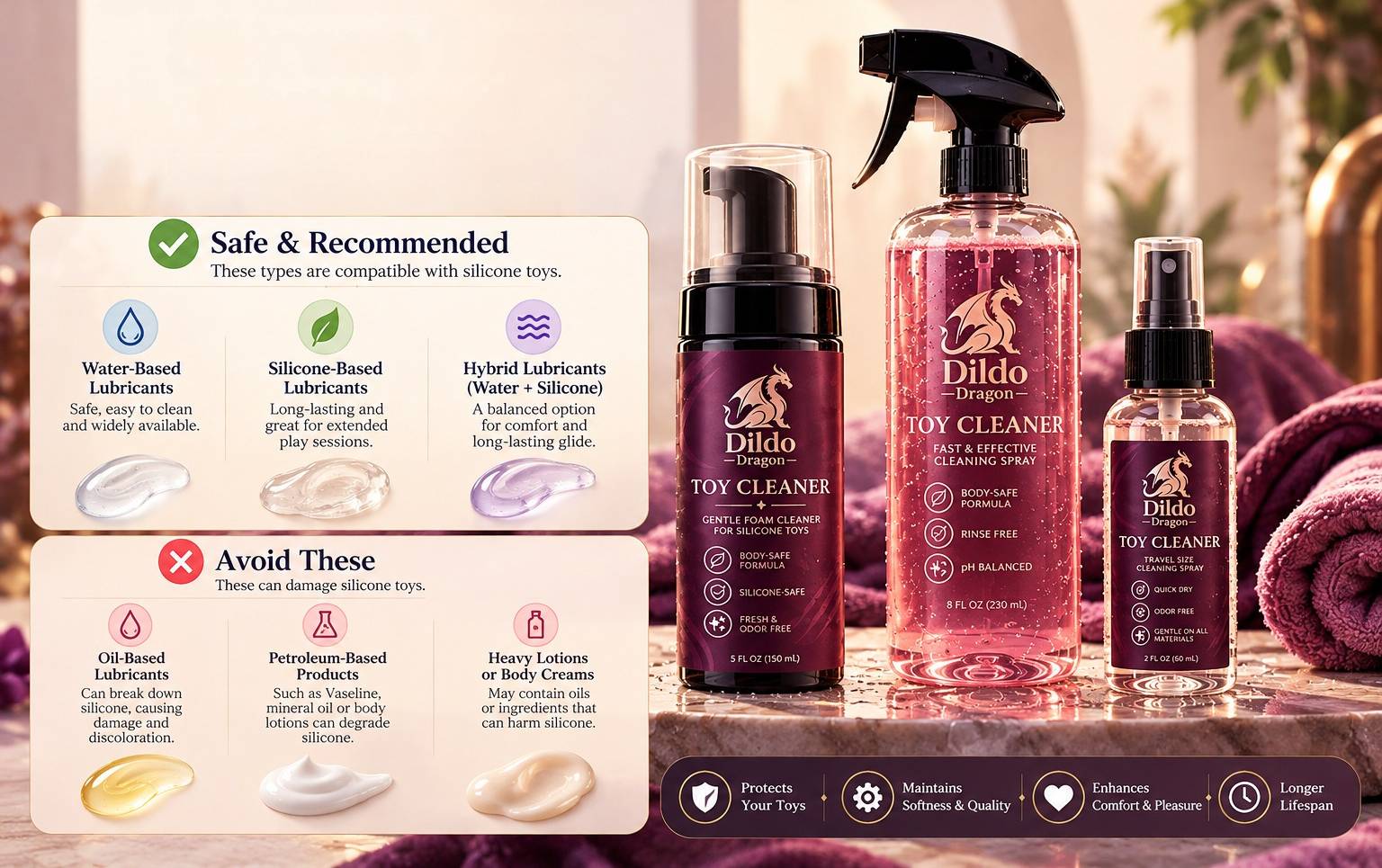
There are four main categories of personal lubricant. Each has strengths and weaknesses, especially when paired with silicone toys.
Water-Based Lube
Water-based lube uses water as its main ingredient, combined with thickeners and preservatives.
Pros:
- Compatible with all toy materials, including silicone.
- Safe with latex and polyisoprene condoms.
- Easy to clean up with water.
- Does not stain sheets.
- Available in thin liquids and thick gels.
Cons:
- Can dry out during longer sessions and may need reapplying.
- Washes away in the shower or bath.
- Some formulas contain ingredients that may irritate sensitive users.
Verdict: For most people, a quality water-based lube is the best lube for silicone toys. It is safe, versatile, and easy to use.
Silicone-Based Lube
Silicone lube is made from silicone oils. It is extremely slick and long-lasting.
Pros:
- Lasts much longer than water-based lube.
- Works in water, making it great for shower play.
- Safe with latex condoms.
- Very smooth and silky.
- Often hypoallergenic and free of preservatives.
Cons:
- May react with some silicone toys, causing the surface to become gummy or tacky.
- Harder to clean. Requires soap and water.
- Can stain fabrics.
- Can make shower and tub surfaces slippery.
Verdict: Excellent for body-only play and anal play. Use with silicone toys only after a spot test.
Hybrid Lube
Hybrid lube blends a water base with a small amount of silicone. It aims to combine the easy cleanup of water-based lube with the longer glide of silicone lube.
Pros:
- Longer lasting than pure water-based lube.
- Easier to clean than pure silicone lube.
- Often creamy and luxurious in texture.
Cons:
- The silicone content may still react with some silicone toys.
- Some formulas contain more additives.
Verdict: A great middle ground, but spot test with silicone toys first.
Oil-Based Lube
Oil-based lubes include commercial oil lubes and natural oils like coconut oil.
Pros:
- Long-lasting.
- Great for external massage and manual play.
Cons:
- Breaks down latex condoms, increasing the risk of breakage.
- Can be hard to wash out and may trap bacteria.
- Associated with irritation and infection for some people when used vaginally.
- Can degrade some toy materials.
Verdict: Not recommended for use with toys or for internal play.
Lube Type Comparison Chart
| Lube Type | Safe With Silicone Toys | Safe With Latex Condoms | Longevity | Cleanup |
|---|---|---|---|---|
| Water-based | Yes | Yes | Moderate | Very easy |
| Silicone-based | Spot test first | Yes | Very long | Needs soap |
| Hybrid | Spot test first | Usually, check label | Long | Easy to moderate |
| Oil-based | Not recommended | No | Long | Difficult |
Can You Use Silicone Lube With Silicone Toys?
This is the most common question we hear, and the honest answer is: sometimes.
Why Silicone Lube Can Damage Silicone Toys
Silicone lube and silicone toys are made from related materials. With some toys, the silicone oils in the lube can bond with the toy’s surface. Over time, this can make the surface feel gummy, tacky, rough, or pitted. Once this happens, the damage cannot be reversed, and a damaged surface can trap bacteria.
Why It Is Not Always a Problem
Many high-quality, platinum-cured silicone toys hold up well with high-quality silicone lubes. The result depends on the specific toy, the specific lube, and how long they stay in contact.
How to Do a Spot Test
Before using silicone or hybrid lube with a silicone toy, test it:
- Choose a hidden spot, such as the bottom of the base.
- Apply a small dab of the lube.
- Wait, ideally at least an hour, or overnight for peace of mind.
- Wash it off with warm soapy water.
- Check the surface. If it feels sticky, gummy, rough, or looks dull, do not use that lube with the toy.
If the surface feels exactly the same as before, the combination is likely safe. Always wash silicone lube off promptly after use.
The Simple Solution
If you do not want to worry about testing, stick with water-based lube. It is the safest default for every silicone toy.
Lube Ingredients to Avoid
Not all lubes are created equal. Some common ingredients can irritate sensitive tissue or disrupt your body’s natural balance. Here are the ones worth watching for.
Glycerin and Sugars
Glycerin is a common ingredient in water-based lube that adds slickness and a slightly sweet taste. For some people, especially those prone to yeast infections, glycerin and other sugars may contribute to yeast overgrowth. Flavored lubes often contain sugars too.
Tip: If you are prone to yeast infections, look for glycerin-free formulas.
Parabens
Parabens are preservatives used in many cosmetics and some lubes. Many people choose to avoid them because of concerns about hormone-related effects. Paraben-free lubes are widely available.
Nonoxynol-9
Nonoxynol-9 is a spermicide found in some lubes and condoms. It can irritate vaginal and rectal tissue, and irritation may increase the risk of sexually transmitted infections. Most sexual health experts recommend avoiding it.
Chlorhexidine
An antiseptic sometimes used as a preservative. It may disrupt the natural bacterial balance of the vagina for some users.
Warming and Tingling Agents
Ingredients like menthol, capsaicin, cinnamon, and certain warming compounds create heat or tingling sensations. They can be fun for external use, but they often cause burning or irritation internally.
Numbing Agents
Lubes containing benzocaine or lidocaine are sometimes marketed for anal play. We recommend avoiding them. Pain is your body’s warning signal, and numbing it can lead to injury.
Fragrances and Dyes
Added scents and colors offer no benefit for your body and are common causes of irritation.
Petroleum and Mineral Oil
Found in some oil-based products. They can break down latex condoms and are difficult to wash out.
Quick Ingredient Checklist
When shopping, look for lubes that are:
- Water-based or high-quality silicone-based
- Glycerin-free (if you are sensitive to yeast infections)
- Paraben-free
- Free of nonoxynol-9
- Fragrance-free and dye-free
- Free of numbing, warming, or tingling agents for internal use
pH and Osmolality: The Science Behind Body-Friendly Lube
Two technical terms appear more and more on lube labels. Here is what they mean in plain English.
pH Balance
pH measures how acidic or alkaline something is. A healthy vagina is naturally acidic, typically around 3.8 to 4.5. The rectum is closer to neutral. Using a lube with a very different pH can disrupt your natural balance.
- For vaginal use, look for lubes labeled as pH-balanced for vaginal use, around 4.5.
- For anal use, a lube closer to neutral is generally a better match.
Osmolality
Osmolality describes the concentration of particles in a lube. If a lube is highly concentrated, it can draw moisture out of the cells it touches, which may cause irritation and damage to delicate tissue.
The World Health Organization has recommended that personal lubricants ideally have an osmolality below 1,200 mOsm/kg. Many popular lubes exceed this, often because of high glycerin content. Lubes labeled as “iso-osmotic” or “body-friendly” are formulated to be closer to the body’s natural levels.
Do You Need to Worry About This?
If you rarely experience irritation, you may not notice a difference. But if you have sensitive skin, recurring infections, or frequent irritation after sex, choosing a pH-balanced, lower osmolality, glycerin-free lube can make a real difference.
Choosing the Best Lube for Silicone Toys by Situation
Different types of play call for different lubes. Here is a quick guide.
For Everyday Toy Play
A quality water-based lube is the best all-around choice. It is safe for every silicone toy, easy to clean, and gentle on the body.
For Anal Play
Anal play needs more lube, and thicker is better.
- Thick water-based gels are the safest match for silicone toys.
- Silicone lube lasts longer but should be spot tested with silicone toys.
- Avoid numbing lubes.
- Reapply generously and often.
Pair with a toy that has a flared base. For sizing tips, see our sex toy sizing guide.
For Textured and Knotted Toys
Fantasy textures and knots create extra friction, so choose a thicker, longer lasting water-based gel. Apply lube to both the toy and your body, and reapply before approaching the knot. Learn more about knots and textures in our knotting dildo guide, or browse our Fantasy Dildos collection.
For Shower and Water Play
Water-based lube washes away quickly in water. Silicone lube lasts much longer, but spot test it with your silicone toy first, and be careful: it makes tubs and shower floors very slippery.
For Sensitive Skin
Look for glycerin-free, paraben-free, fragrance-free, pH-balanced water-based lube. Always patch test a new lube on your inner arm before intimate use.
For Use With Condoms
Water-based and silicone-based lubes are both safe with latex condoms. Never use oil-based lube with latex condoms.
For Couples
A versatile water-based lube works for most shared play. If you are using a double dildo, keep extra lube within reach, since two people use it up quickly. See our guide to choosing a double dildo for couples.
Best Lube for Specialty Toys
Squirting Dildos
Use a thin, water-based lube or a fluid designed for squirting toys in the reservoir. Thick gels and silicone lube are difficult to push through and hard to flush out of the channel. Learn more in our guide on how a squirting dildo works, or browse our Squirting Dildos collection.
Inflatable Dildos
Water-based lube is ideal. As the toy expands, reapply to keep things smooth. Read our guide on how to use an inflatable dildo, or shop our Inflatable Dildos collection.
Ovipositors
Use water-based lube on the eggs, inside the channel, and on the toy. It rinses away easily and will not leave residue inside the channel. Our ovipositor toy guide covers the full process. Browse the Ovipositors collection.
Vibrators
Water-based lube is the safest choice. Keep lube away from charging ports. Explore our Vibrators collection.
Masturbators and Sleeves
Many strokers and sleeves are made from TPE or similar materials, which should only be used with water-based lube. Check the material on each product page in our Masturbator and Penis Sleeves collections.
How to Use Lube the Right Way
Use More Than You Think
Most people use too little lube. A generous amount is always better than too little, especially with larger or textured toys.
Apply to Both the Toy and Your Body
Coating both surfaces creates the smoothest glide.
Warm It Up
Cold lube can be a surprise. Warm it between your palms for a few seconds before applying.
Reapply Often
When things start to feel sticky or dry, add more. Water-based lube can be revived with a few drops of water.
Keep It Within Reach
Place the bottle nearby before you start so you do not have to pause.
Pump Bottles and Flip Caps
Pump bottles are easy to use one-handed and hygienic. Flip caps work well too. Avoid dipping fingers or toys directly into jar-style containers, which can introduce bacteria.
Cleanup and Toy Care After Using Lube
The type of lube affects how you clean up.
- Water-based lube: Rinses away easily with warm water and mild soap.
- Silicone-based lube: Requires soap and warm water to fully remove. Wash silicone toys promptly to prevent surface damage.
- Hybrid lube: Usually washes away with soap and water.
After cleaning, dry your toy completely and store it in its own pouch. For a complete routine, read our guide on how to clean silicone toys and shop our Toy Cleaners collection.
How to Store Lube and When to Replace It
Lube does not last forever.
- Check the expiration date. Most lubes list one on the bottle.
- Store in a cool, dry place away from direct sunlight and heat.
- Close the cap tightly after each use.
- Replace it if the color, smell, or texture changes, or if it separates.
Expired lube may lose its effectiveness, and preservatives may break down, increasing the risk of contamination.
Common Lube Myths
Myth: “Silicone lube will always ruin silicone toys.”
Fact: It depends on the toy and lube. Many combinations work fine. Spot test to be sure.
Myth: “Saliva works just as well.”
Fact: Saliva dries quickly and contains bacteria that can disrupt vaginal balance. It is not an effective substitute for lube.
Myth: “Coconut oil is natural, so it is safe.”
Fact: Natural does not always mean body-safe for internal use. Oils break down latex condoms and can be hard to clean from toys.
Myth: “Needing lube means something is wrong.”
Fact: Everyone can benefit from lube. Hormones, stress, medications, and many other factors affect natural lubrication. Using lube is simply smart.
Myth: “Lotion or conditioner works fine in a pinch.”
Fact: These products are not designed for internal use and often contain fragrances and additives that cause irritation.
Myth: “Numbing lube makes anal play easier.”
Fact: Numbing agents hide pain signals that protect you from injury. Relaxation, patience, and plenty of regular lube are far safer.
The Best Lube for Silicone Toys: Our Quick Recommendations
| Situation | Recommended Lube |
|---|---|
| Everyday silicone toy use | Water-based, glycerin-free |
| Anal play with silicone toys | Thick water-based gel |
| Textured and knotted toys | Thick, long-lasting water-based gel |
| Sensitive skin or yeast-prone | pH-balanced, glycerin-free, paraben-free |
| Shower play | Silicone-based (spot test first) |
| Squirting toys and ovipositors | Thin water-based |
| With latex condoms | Water-based or silicone-based |
| Massage and external play | Any body-safe lube, including silicone |
Why Shop Lubricants and Silicone Toys at DildoDragon?
At DildoDragon, we want every experience to be safe, smooth, and unforgettable. Our fantasy toys are made from 100 percent body-safe silicone, and our lubricant selection is chosen to pair perfectly with them.
Explore our collections:
- Lubricants: toy-friendly lubes for every type of play.
- Toy Cleaners: easy aftercare.
- Fantasy Dildos: signature creature designs.
- All Dildos: our full lineup.
Customer favorites like Ashryn The Phoenix Reborn, Nyx The Aurora Wraith, Grimjaw The Fanged Stalker, and Aria The Marble Muse feel their best with a quality water-based lube.
When you shop with us, you also get:
- Free discreet shipping on US orders over $75. See our Shipping Policy.
- 15 percent off your first order when you join our community.
- Buy 2 dildos, get 12 percent off with code 12OFFDD.
- Real customer feedback on our Reviews page.
- Helpful support through our Contact page and FAQ page.
Want to learn more about toy materials? Read our guide to body-safe silicone sex toys.
Frequently Asked Questions
What is the best lube for silicone toys?
For most people, a high-quality water-based lube is the best lube for silicone toys. It is compatible with all silicone, safe with condoms, and easy to clean. Glycerin-free and paraben-free formulas are ideal for sensitive users.
Can you use silicone lube with silicone toys?
Sometimes. Some silicone lubes can make certain silicone toys gummy or tacky. Spot test by applying a small amount to the base of the toy, waiting, washing it off, and checking the surface before regular use.
What happens if silicone lube damages my toy?
The surface may become sticky, gummy, rough, or dull. This damage is permanent, and a damaged surface can trap bacteria, so the toy should be replaced.
Is coconut oil safe to use with toys?
Coconut oil is not recommended for use with toys or for internal play. It breaks down latex condoms, can be hard to clean, and may cause irritation for some people.
What lube is best for sensitive skin?
Look for a water-based lube that is glycerin-free, paraben-free, fragrance-free, and pH-balanced. Patch test a small amount on your inner arm before intimate use.
Does lube expire?
Yes. Most lubes have an expiration date on the bottle. Replace lube if it is expired or if its color, smell, or texture changes.
Final Thoughts
Lube is one of the smallest purchases you will make, but it has one of the biggest impacts on your experience. Choosing the best lube for silicone toys protects your body, protects your toy, and makes every moment smoother and more enjoyable.
Remember the essentials. Water-based lube is the safest default for silicone. Spot test silicone and hybrid lubes before using them with silicone toys. Avoid numbing agents, harsh additives, and oils. Choose pH-balanced, glycerin-free formulas if you are sensitive. And always use more lube than you think you need.
Ready to find your perfect match? Explore the full DildoDragon Lubricants collection and give your favorite creatures the glide they deserve.