When you shop for an adult toy, it is easy to focus on shape, size, and color. Those details matter, of course. But there is one factor that quietly affects your health, your comfort, and how long your toy lasts more than anything else: the material it is made from.
A sex toy comes into close contact with some of the most sensitive and absorbent tissue in the human body. Yet many people are surprised to learn that adult toys in the United States face very little regulation. Plenty of toys on the market are made from cheap materials that can trap bacteria, break down over time, or contain chemicals you would never want near your body.
That is why body-safe silicone sex toys have become the gold standard among educators, sex-positive retailers, and experienced collectors. In this guide, we explain exactly what “body-safe” means, compare silicone to every other common toy material, show you how to spot fake silicone, and share care tips for each material so you can shop with total confidence.
Want to browse while you read? Explore everything we offer in our Shop All collection.
What Does “Body-Safe” Actually Mean?
“Body-safe” is a term you will see on many product listings, but it is not an official government certification. It is a practical standard used across the industry. A truly body-safe material generally meets four requirements:
- Nonporous. The surface is sealed, so bacteria, fluids, and lube cannot soak in.
- Chemically stable. The material does not break down, leach chemicals, or become sticky over time.
- Free of harmful additives. It contains no phthalates or other questionable softening chemicals.
- Easy to clean thoroughly. It can be fully sanitized with normal cleaning methods.
If a material fails any of these tests, it is not truly body-safe, no matter what the packaging says.
Why Sex Toys Are Largely Unregulated in the US
In the United States, most adult toys are not reviewed or approved by a federal agency before they are sold. Many are marketed as “novelty items,” a label that helps manufacturers avoid the kind of oversight that applies to medical devices or children’s products.
Federal rules that limit certain phthalates, for example, apply to children’s toys and childcare products, not to adult products. Some states, such as California, require warning labels when products contain certain listed chemicals, but a warning label is not the same as a safety standard.
The result is simple: when it comes to adult toys, the responsibility for safety falls largely on the brand and on you, the shopper. Knowing your materials is your best protection.
Why Material Matters So Much
The tissue inside the vagina and rectum is delicate and highly absorbent. It is also home to a natural balance of bacteria that helps keep you healthy. A poor-quality material can disrupt that balance in several ways:
- Trapping bacteria in microscopic pores, which can lead to infections.
- Releasing chemicals that may cause irritation, burning, or allergic reactions.
- Breaking down into a sticky or oily surface that is impossible to clean.
- Holding odors and stains that never fully wash out.
Choosing body-safe silicone sex toys eliminates most of these risks from the start.
Porous vs. Nonporous: The Most Important Concept
If you remember only one thing from this guide, make it this: porous materials can never be fully cleaned.
What Are Porous Materials?
Porous materials are covered in tiny holes that are invisible to the eye. Bacteria, yeast, fungi, lube, and body fluids can work their way into those holes. Washing removes what is on the surface, but it cannot reach what is trapped inside. Over time, porous toys can develop odors, discoloration, and mold.
Because porous toys cannot be sanitized, they should never be shared between partners without a condom, and they should be replaced regularly.
What Are Nonporous Materials?
Nonporous materials have a smooth, sealed surface. Nothing can soak in, so a quick wash truly gets the toy clean. Nonporous toys can be shared between partners after proper cleaning, and many can even be sterilized with boiling water.
Silicone: The Gold Standard for Adult Toys
Silicone is a synthetic material made from silicon, oxygen, and other elements. It is used in medical devices, kitchenware, and baby bottle nipples because it is stable, durable, and nonreactive. Those same qualities make it ideal for intimate products.
Why Silicone Is the Top Choice
- Nonporous. Bacteria and fluids cannot soak into the surface.
- Phthalate-free. Pure silicone does not need softening chemicals.
- Heat resistant. Solid silicone toys can often be boiled for deep cleaning.
- Durable. With proper care, a silicone toy can last for years.
- Hypoallergenic for most people. Silicone allergies are very rare.
- Comfortable feel. It warms to body temperature and has a smooth, velvety texture.
- Versatile. Silicone can be made soft, medium, or firm, and it captures incredible detail.
That last point is especially important for fantasy designs. The scales, ridges, and sculpted textures of toys like Grimjaw The Fanged Stalker and Nyx The Aurora Wraith depend on a material that holds fine detail without breaking down.
Platinum-Cured vs. Tin-Cured Silicone
Silicone is “cured,” or set into its final form, using a catalyst. The two most common types are:
- Platinum-cured silicone. Uses platinum as a catalyst. It is considered the highest quality option for intimate products, known for purity, durability, and resistance to tearing.
- Tin-cured silicone. Uses tin as a catalyst. It is less expensive and widely used in molding, but it tends to be less durable over time.
Both are nonporous when made correctly, but platinum-cured silicone is generally preferred for premium toys.
“Medical-Grade” and “Food-Grade” Labels
You may see silicone toys labeled as “medical-grade” or “food-grade.” These terms suggest a certain level of purity, but they are not always verified. They are a good sign when they come from a trusted brand, but they are not a replacement for buying from a reputable seller.
Beware of “Silicone Blends”
A “silicone blend” or “silicone-like” toy may contain only a small amount of silicone mixed with cheaper, porous fillers. These products do not offer the same safety benefits as 100 percent silicone. If a listing does not clearly say “100 percent silicone,” be cautious.
The Downsides of Silicone
Silicone is not perfect for every situation:
- It costs more than cheaper materials, although it lasts much longer.
- It can attract lint and dust, so proper storage matters.
- It may react with some silicone-based lubes, which we cover later in this guide.
For most people, these small trade-offs are well worth the safety and durability.
Other Body-Safe Materials
Silicone is not the only safe option. Several other materials are nonporous and body-safe, each with its own personality.
Borosilicate Glass
Borosilicate glass is the same heat-resistant glass used in laboratory equipment and quality cookware.
Pros: Nonporous, easy to sterilize, beautifully smooth, and great for temperature play because it holds warmth or coolness.
Cons: Completely rigid, heavier than silicone, and can break if dropped. Always inspect glass toys for chips or cracks before use.
Stainless Steel
Medical-grade stainless steel is extremely durable and easy to clean.
Pros: Nonporous, nearly indestructible, great weight for pressure, and ideal for temperature play.
Cons: Completely rigid, heavy, and more expensive. The firmness is not for everyone.
ABS Plastic
ABS is a hard, nonporous plastic commonly used for vibrator casings and some rigid toys.
Pros: Nonporous, lightweight, affordable, and easy to clean.
Cons: Hard and rigid, and not heat-safe for boiling. Many quality vibrators combine an ABS core with a silicone outer layer. Browse our Vibrators collection for options.
Sealed Hardwood
Some artisan toys are made from hardwood finished with a body-safe sealant.
Pros: Unique, natural look and satisfying weight.
Cons: Only safe while the finish is intact. Any chips or scratches expose porous wood underneath.
Materials to Approach With Caution
Now let’s look at the materials that do not meet the body-safe standard, or that come with important limitations.
TPE and TPR
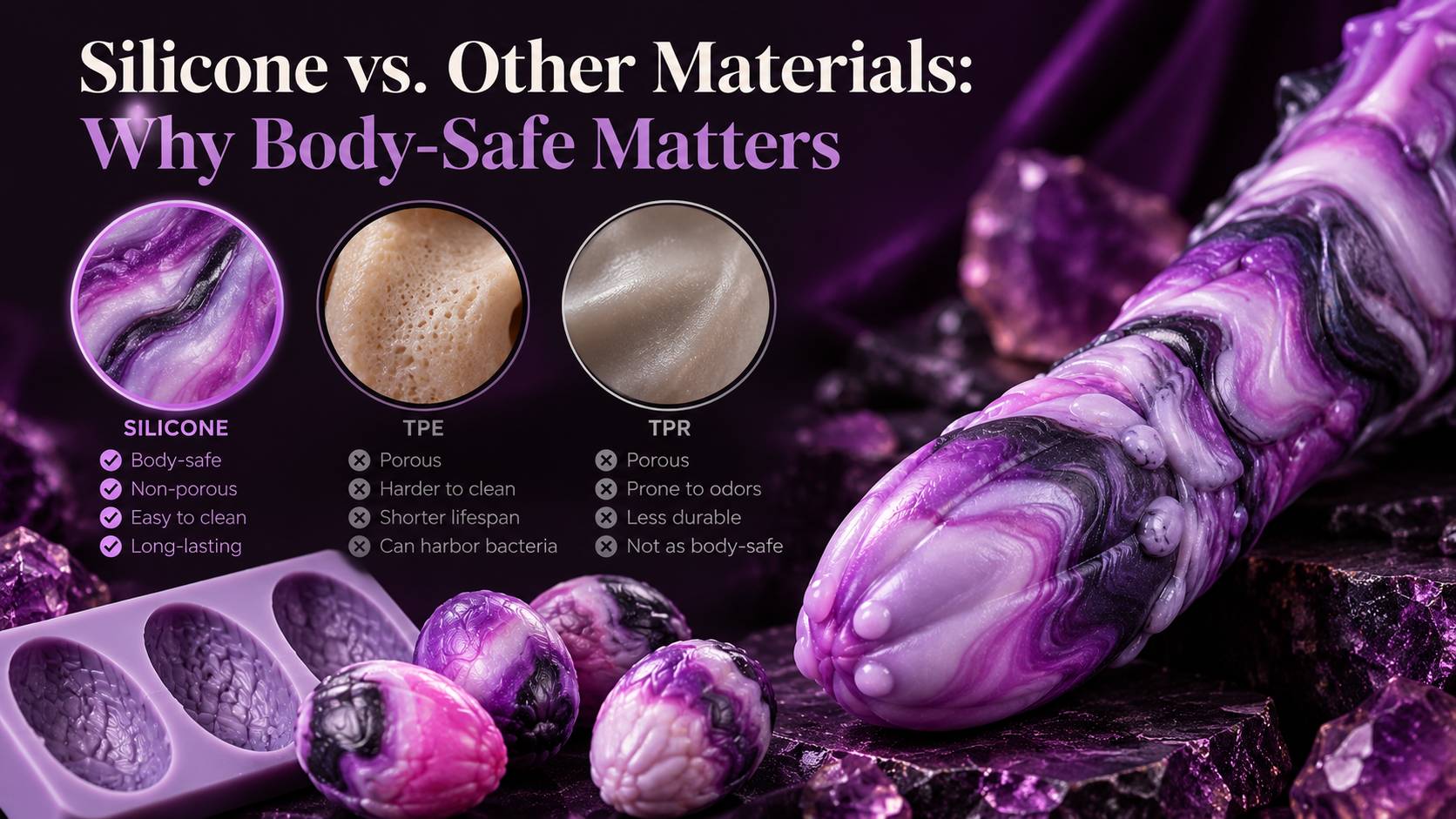
Thermoplastic elastomer (TPE) and thermoplastic rubber (TPR) are soft, stretchy, and inexpensive. They are common in budget toys and in many masturbators and sleeves because they feel very soft and realistic.
Pros: Soft, flexible, affordable, and usually phthalate-free.
Cons: Porous, cannot be fully sanitized, may degrade over time, cannot be boiled, and can react with other materials during storage.
The verdict: TPE is not dangerous in itself, but because it is porous, it needs careful cleaning, complete drying, and regular replacement. Never share a TPE toy without a condom. If you shop for strokers or sleeves in our Masturbator or Penis Sleeves collections, check the material listed on each product page and follow its specific care instructions.
Jelly Rubber
Jelly toys are translucent, squishy, and often brightly colored. They were once extremely common but have fallen out of favor with educators.
Why to avoid: Jelly rubber is highly porous and often contains phthalates. Many jelly toys have a strong chemical smell and an oily or sticky surface. These are warning signs of a material that is breaking down.
PVC
PVC, or polyvinyl chloride, is a common plastic. In its hard form, it is fairly stable. But soft PVC toys are often made flexible using phthalates.
Why to be careful: Unless a PVC toy is clearly labeled phthalate-free from a trustworthy brand, it is best to avoid it for internal use.
Latex
Latex was one of the earliest materials used for adult toys.
Why to be careful: Latex is porous, degrades over time, and is a common allergen. Latex allergies can cause reactions ranging from itching to serious symptoms. Most modern toy buyers choose silicone instead.
“Realistic Skin” Materials
Many toys advertise lifelike skin materials under brand names. These are usually TPE, TPR, or similar blends designed to feel soft and realistic.
Why to be careful: They are typically porous, need special care, and cannot be sanitized like silicone.
What Are Phthalates and Why Should You Avoid Them?
Phthalates are chemicals used to make hard plastics soft and flexible. They are found in many consumer products, from vinyl flooring to cosmetics.
Some phthalates have been linked in research to hormone disruption, which is why several have been restricted in children’s toys in the United States and in many products in the European Union. Adult toys, however, are not covered by those same restrictions.
When a toy containing phthalates is used internally, especially with warmth and friction, there is concern that the chemicals may be absorbed through sensitive tissue. Research on adult toys specifically is limited, but most sexual health educators recommend avoiding phthalates altogether. The simplest way to do that is to choose body-safe silicone sex toys and other nonporous, phthalate-free materials.
How to Tell If a Toy Is Real Silicone
Because “silicone” is such a desirable word, some sellers use it loosely. Here is how to protect yourself.
Read the Label Carefully
Look for clear wording like “100 percent silicone” or “pure silicone.” Vague phrases like “silicone blend,” “silicone-like,” “skin-safe material,” or “premium material” are red flags.
Check the Price
High-quality silicone costs more to produce. An extremely cheap toy advertised as silicone deserves extra skepticism.
Use Your Senses
- Smell: Pure silicone has little to no odor. A strong chemical or plastic smell suggests other materials.
- Touch: Silicone feels smooth and slightly velvety. A sticky, oily, or greasy surface is a warning sign.
- Look: Silicone does not “sweat” or develop an oily film over time. If a toy looks shiny and wet when dry, it may contain softeners.
The Stretch Test
Gently stretch a small area of the toy. Pure silicone tends to return to its original shape and color. Some cheaper blends may show a white stress mark or stay deformed.
About the Flame Test
You may read online about the “flame test,” where a lighter flame is held to a toy to see whether it melts. This test is not reliable for all silicone types, it can damage your toy, and it creates a fire risk. We do not recommend it. Buying from a reputable brand is a far better approach.
Buy From a Trusted Seller
The single best way to get genuine silicone is to shop from a brand that clearly lists materials, stands behind its products, and makes it easy to ask questions. You can learn about our standards on our About Us page or reach our team through the Contact page.
Lube Compatibility by Material
The right lubricant keeps you comfortable and protects your toy. The wrong one can damage it.
Why Silicone Lube and Silicone Toys Can Clash
Silicone-based lube can sometimes bond with the surface of a silicone toy, leaving it gummy or tacky. Some high-quality silicone toys tolerate silicone lube without issue, but it is always safest to test a small amount on the base first. For everyday use, a water-based lube is the easiest choice. You can find toy-friendly options in our Lubricants collection.
Oil-Based Products
Oils can degrade latex condoms, may irritate sensitive tissue, and are difficult to clean off porous materials. For most toys, water-based lube is the best match.
How to Clean Toys by Material
Each material needs a slightly different care routine.
Silicone
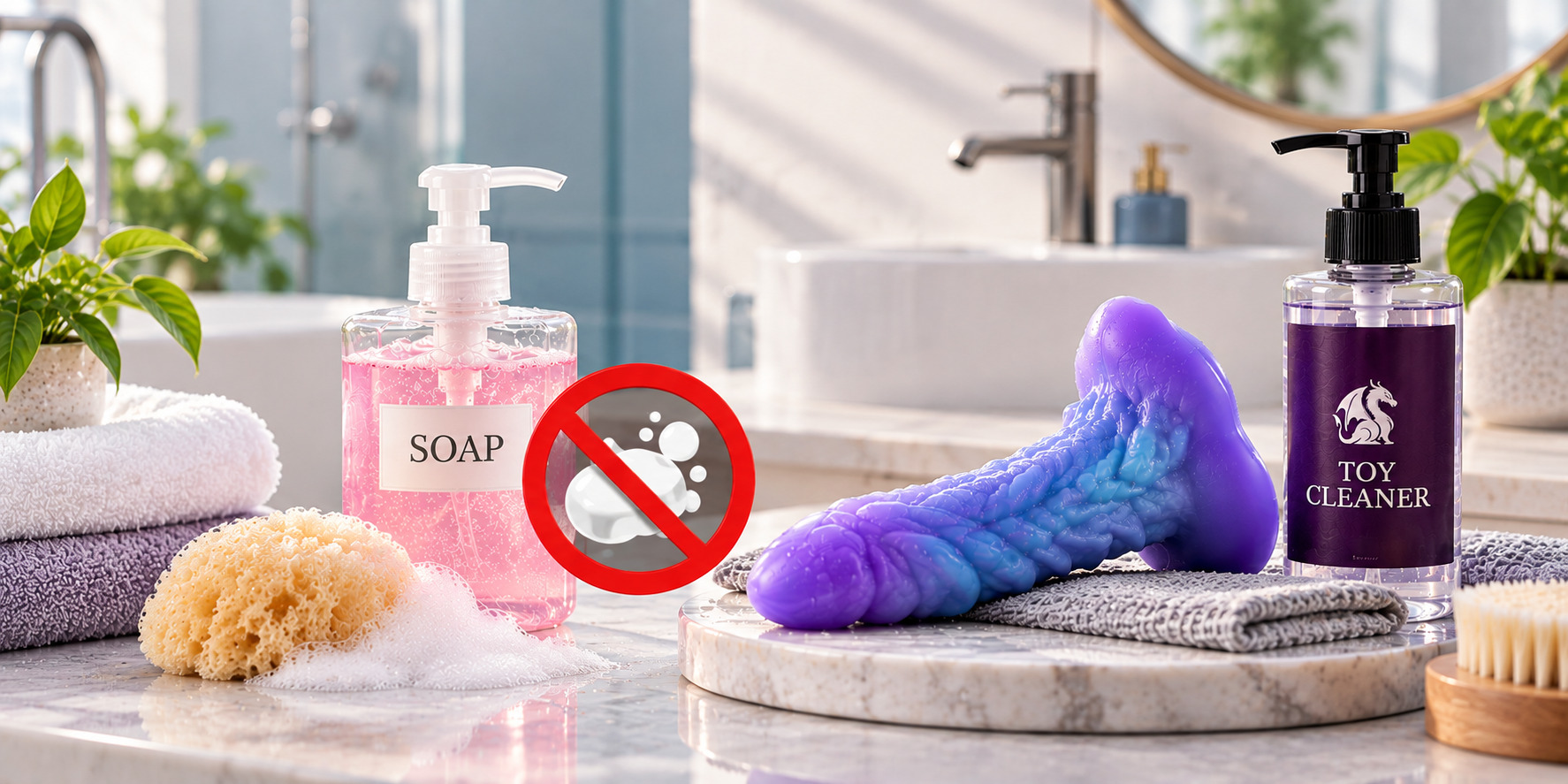
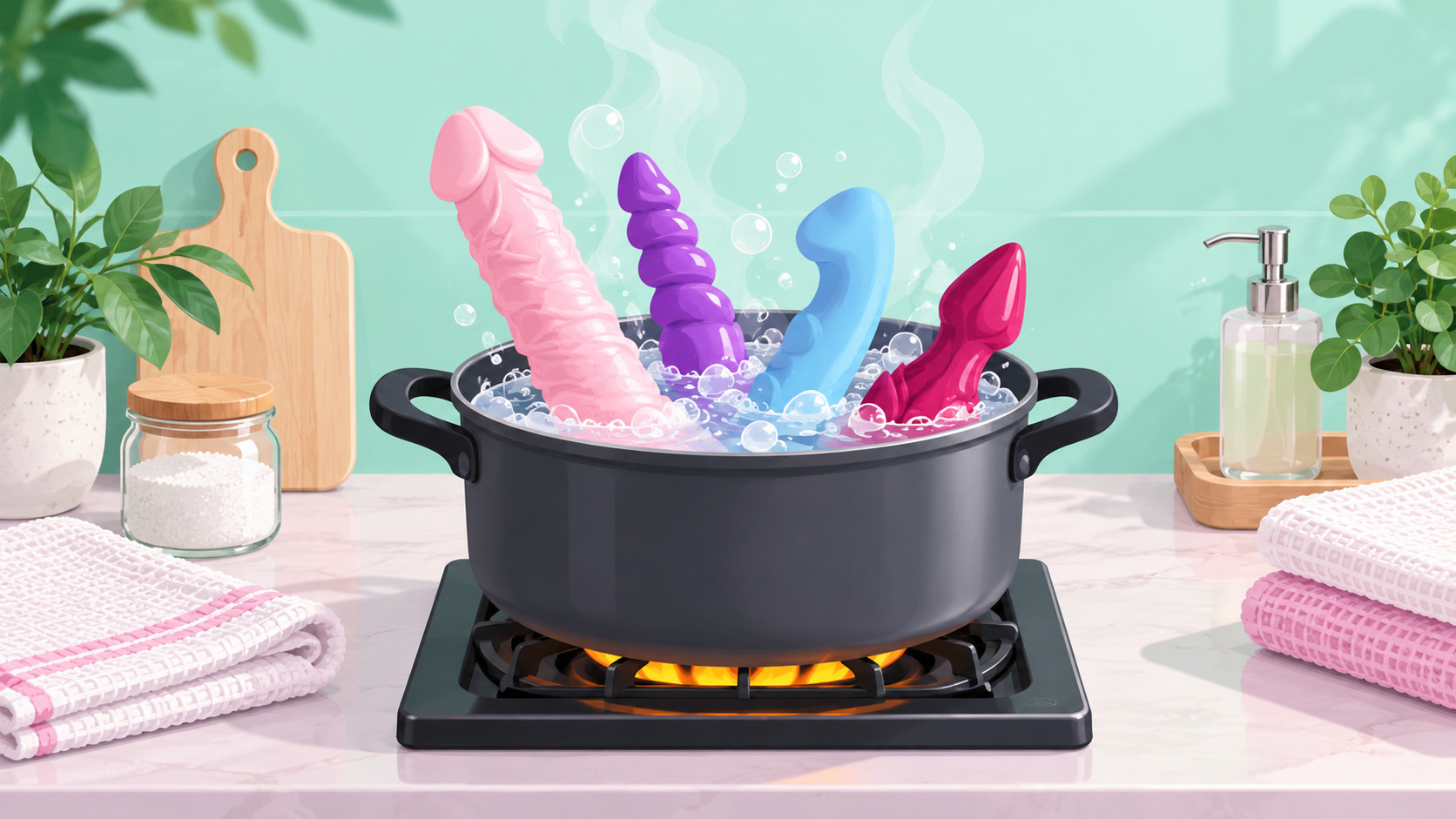
Wash with warm water and mild, unscented soap or a dedicated cleaner from our Toy Cleaners collection. Solid silicone toys without electronics, pumps, or channels can be boiled for a few minutes for a deeper clean. Toys with internal features, like those in our Squirting Dildos and Inflatable Dildos collections, need special care. Our guides on how a squirting dildo works and how to use an inflatable dildo explain the process step by step.
Glass and Stainless Steel
Wash with warm soapy water. Both can typically be boiled or placed in the dishwasher, but always check the manufacturer’s instructions. Avoid sudden temperature changes with glass, which can cause cracks.
ABS Plastic
Wipe with warm soapy water or a toy cleaner. Keep water away from charging ports and battery compartments, and never boil.
TPE and TPR
Wash gently with warm water and mild soap. Do not boil. Dry thoroughly, then lightly dust with a renewing powder if recommended by the manufacturer. Replace regularly.
Porous Toys in General
Because porous toys cannot be fully sanitized, use a condom when sharing, clean them after every use, and replace them at the first sign of odor, stains, or stickiness.
How to Store Toys Made From Different Materials
Storage is where material differences really show up.
- Store toys separately. Some materials, especially TPE, jelly, and PVC, can react with silicone and other toys when stored touching. The result may be melting, discoloration, or surface damage.
- Use individual pouches or boxes. Soft cloth bags protect silicone from lint and keep toys apart.
- Keep toys cool and dry. Heat and sunlight speed up material breakdown.
- Protect glass in padded cases to prevent chips.
- Keep sharp objects away from silicone and TPE.
Who Benefits Most From Body-Safe Silicone?
Everyone benefits from safer materials, but some people especially should prioritize body-safe silicone sex toys:
- People with sensitive skin or allergies, including latex allergies.
- People prone to yeast infections, bacterial vaginosis, or urinary tract infections, since porous toys can harbor bacteria.
- Anyone using toys frequently, where durability and hygiene matter even more.
- Couples who share toys, since nonporous silicone can be properly cleaned between partners.
- Collectors who want toys that keep their detail, color, and shape for years.
Is Silicone Worth the Higher Price?
It is true that silicone toys cost more upfront. But when you think about cost per use, silicone often comes out ahead.
A cheap porous toy may need to be replaced within months as it becomes sticky, stained, or smelly. A quality silicone toy can last for years with proper care. Add the health benefits and the peace of mind, and silicone is one of the best investments you can make in your intimate wellness.
Looking for value? Our Clearance collection features body-safe favorites at reduced prices, and you can save more with our bundle offer below.
Explore Body-Safe Silicone at DildoDragon
At DildoDragon, safety is the foundation of everything we create. Our fantasy toys are made from 100 percent body-safe silicone, designed to capture intricate creature details and built to last.
Explore our collections:
- Fantasy Dildos: our signature dragon, phoenix, and creature designs.
- All Dildos: the complete lineup in one place.
- Squirting Dildos: fantasy toys with a realistic finish.
- Inflatable Dildos: adjustable fullness at your command.
- LUUK Double Dildos: made for shared play.
- Ovipositors: for adventurous egg-laying fantasies.
Customer favorites include Ashryn The Phoenix Reborn and Aria The Marble Muse, a stunning example of the hand-poured marbled color that only quality silicone can hold.
When you shop with us, you also get:
- Free discreet shipping on US orders over $75, in plain, unmarked packaging. See our Shipping Policy.
- 15 percent off your first order when you join our community.
- Buy 2 dildos, get 12 percent off with code 12OFFDD.
- Real customer feedback on our Reviews page.
- Clear answers on our FAQ page.
Frequently Asked Questions
What is the safest material for sex toys?
Body-safe, 100 percent silicone is widely considered one of the safest materials for sex toys. Borosilicate glass, medical-grade stainless steel, and ABS plastic are also nonporous and body-safe options.
Is TPE body-safe?
TPE is usually phthalate-free and is not considered dangerous, but it is porous. That means it cannot be fully sanitized and should be cleaned carefully, dried completely, used with a condom if shared, and replaced regularly.
Are jelly sex toys safe?
Jelly toys are generally not recommended. They are highly porous and often contain phthalates. A strong chemical smell or oily surface are signs of a material that is breaking down.
Why does my old toy feel sticky?
A sticky, oily, or tacky surface usually means the material is breaking down or reacting with another toy or lubricant. It is a sign the toy should be replaced.
Can I store silicone toys together?
Silicone toys can usually touch each other safely, but it is best to store every toy in its own pouch. Keep silicone away from TPE, jelly, and PVC toys, which can react with it and cause damage.
Final Thoughts
The material of your toy matters just as much as its shape or size. In a market with very little regulation, understanding materials is the best way to protect your health and your investment.
Remember the essentials. Choose nonporous materials. Look for “100 percent silicone” rather than vague blends. Avoid jelly and unlabeled soft PVC. Use water-based lube with silicone. Store toys separately. And when in doubt, buy from a brand that is transparent about what goes into its products.
Ready to upgrade your collection? Explore the full range of body-safe silicone sex toys in the DildoDragon Shop All collection and find the creature that is made to last.